Municipalities
We’re with you on your journey to clean cities and towns.

Benefits of working with Reclay Systems

A natural partner
In the introduction and implementation of sorted collection systems at municipal level
Maximum support
in municipal waste management solutions
Optimal solutions
sorted collection solutions best suited to local conditions
Education of residents
focusing on different target groups
Open communication
with municipal representatives increases the rate of sorting of municipal waste components
Common objectives
By increasing the amount of separated MSW components, municipalities will save financial resources for the management of mixed waste
Obligations of the municipality in municipal waste management
According to Act No. 79/2015 Coll. on Waste, the municipality is obliged to comply with Sections 10(1), 14(1), 81(7) and 81(8) of the Waste Act:
- to draw up a programme of the municipality if the annual production of municipal waste, including small construction waste, exceeds 350 tonnes on its territory or if the number of inhabitants exceeds 1,000,
- fulfil all the obligations of a waste holder,
- ensure the collection and transport of mixed municipal waste generated on its territory for the purpose of its recovery or disposal in accordance with this Act, including the provision of collection containers corresponding to the system of collection of mixed municipal waste in the municipality.
ensuring the introduction and implementation of separate collection:
- municipal waste for paper, plastics, metals, glass and cardboard-based composite packaging
- biodegradable kitchen waste, except that generated by a natural person – entrepreneur and a legal person operating a catering establishment109) (hereinafter referred to as ‘kitchen operator’) (§ 83(1)),
- edible oils and fats from households, and
- biodegradable waste from gardens and parks, including waste from cemeteries,
municipalities in the extended producer responsibility scheme
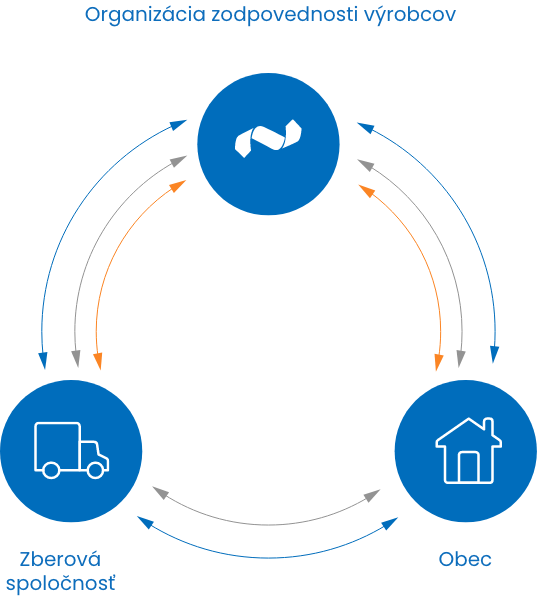
Municipalities are an integral part of the application of the principle of extended producer responsibility, as the vast majority of products destined for the final consumer reach the end of their useful life in municipalities. Packaging and non-packaging waste is also part of municipal waste and this is where the waste management cycle begins.
The system of separate collection of selected waste components in the municipality is financed by a contracted Packaging CAB, which represents producers of packaging and non-packaging products.
If you have not found the answer to your question, please contact our consultant.
Ing. Alžbeta Benková
Managing Director